
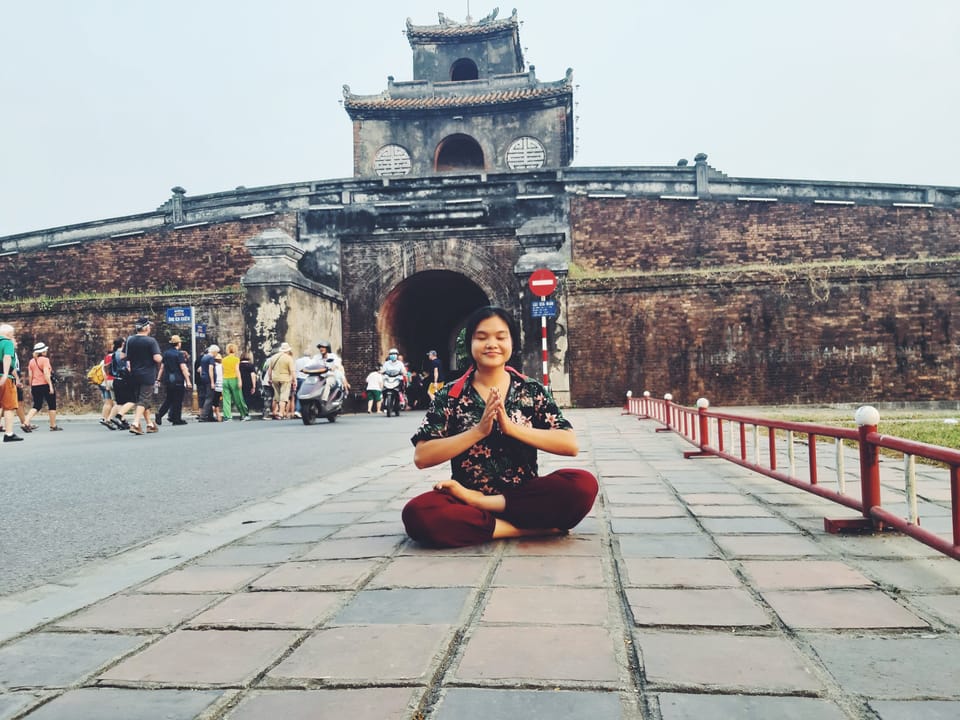
In this post, I will share with you 3 things: my story with anger, my attempts in processing it, and the current methods I use to take care of it. Even though, I think you would get the most out of this post if you can spend 10-15 minutes to savour the whole thing, but each section also delivers helpful informations and messages when read independently.
My story with anger
I have a big seed of anger in me. It was planted since I was a little child who was beaten up for things I did wrong, and for things I didn’t know could be wrong and I wasn’t allowed to be angry or feel unjust.
I didn’t know how to take care of it. I was not even aware that it existed as it has been a part of my being for such a long time. It’s manifested every now and again whenever there is a slightest trigger. I guess that’s what people call being “sensitive” or “over-dramatic”. I was also trained to view strong negative emotions such as anger as bad, so I have been struggling with the limited choices I thought I had: either I release the anger onto the person that hurt me, or I keep suppressing it and let the situation slide and nothing “bad” or “awkward” would happen. I used to opt for the later option, I became a very non-confrontational type of person. Think of a beautiful looking country home in a peaceful afternoon, and there is domestic abuse going-on inside.
My relatives used to tell me how kind and nice, or sometimes even naive I was as a child. I remember clearly how proud I was when an aunt told me: “How could anyone ever hate such a kind child?” I was so happy to be seen as kind. I took it as a validation, a reinforcement to keep on rejecting all the negative feelings as if they were wrong and that they were not supposed to be a part of me. I denied myself the right to be angry even when I was treated wrong.
The anger didn’t disappear just because I rejected it though, it piled up and suppressed, waiting for its chance to explode. By the end of my second year in university in 2012, I started to get anxiety attacks. I have no control over those attacks, it has its own life: it would sob helplessly, it would throw things around, it had smacked 2-3 phones into pieces, I said things I couldn’t believe they were coming out of my mouth. It was like watching a movie happening in real life where I was the lead actor but being controlled by an invisible powerful director. For the longest time, I truly believed something was fundamentally wrong with me. The unwavering belief had led me to sculpt myself into a little perfect image, which no one would be able to see how flawed and unlovable I was, or so I believed.
My attempts in processing anger
In early 2018, when anger had completely taken over my being energetically, when there was no space left for strategic thinking, a light sparked in me. One morning when I was paralyzed with anxiety and couldn’t get off my bed to get to work, a realization came to me as I stared blatantly at the ceiling: that I could either continue to grieve an un-lived life fueled by anxiety or I just have to start doing something about it. I chose the latter option. In my search for ways to live the un-lived life, I found the teaching of Thich Nhat Hanh, Thay, a zen teacher. Thay has this metaphor that I now use as guidance whenever I feel anger or anxiety arises in me; Thay said that when someone triggers the seed of anger in us, it’s like they have started a fire in our home, so it is our choice whether to keep chasing after the culprit to blame them for what they have done or to stay and take care of that fire so it wouldn’t burn the entire house down.
Thay taught me that I have more than just 2 choices when it comes to my negative emotions: I neither have to release it nor suppress it, but rather I should learn how to take care of it. And it has been a very interesting process to say the least.
Thay said that we can only take care of our anger or negative emotions by compassion and understanding. And until very recently, I always subconsciously took it to mean that I need to be compassionate and understanding towards the one that has triggered the seed of anger in me. So when I am misunderstood or treated unfairly, I would immediately turn on my investigative mode to find reasons for why people do what they do. I basically took it upon myself to find excuses for their actions. This strategy helped to calm down my anger very effectively at the beginning: because that person is stressed that’s why she attacks me verbally, because they don’t know how to love themselves that’s why they become very judgemental and manipulative. Eventually, it stopped working though because it was just basically a different method to suppress my emotions by giving people’s behaviours subjective and judgemental narrations.
I realized then what Thay actually meant was to use compassion to cultivate a deeper understanding towards my own seed of anger, and not others’ behaviours. That is the only way to take care of it. Instinctively, that resonates with me, but after 2 minutes, all kinds of questions pop-up: so, I can find in a dictionary what compassion means, but what does compassion feel like in my body? Do I even have it? How can I use it? But then again what’s there to understand about anger when it is just simply wrong, right? If no concrete actions can be taken to answer these questions, then it would just be another cliche in a self help book, non?
Methods I now use to take care of anger
In the past year, I have tried different meditation and mindfulness methods in hope of finding answers to the above questions and to ultimately learn how to take care of my anger. I have found the following implementations that have helped me to take care of and understand my anger, and ultimately myself better.
Daily Meditation
- This is like taking my daily vitamins. I don’t need it to function, but I need it to function effectively. I can write a whole blog post on the impact meditation and mindfulness have on my personal life and theatrical practices, so I will save further details for that post.
How
- When I first started meditating regularly, I sat for 10 minutes each time. The only goal is to sit for 10 minutes every day even when my mind is not still, and come back to my breath when I find myself lost in thoughts. I found guided meditations help a lot at the beginning.
- My go-to app (and it’s FREE) for mediation is the Plum Village app. I meditated with Mindfulness of Thinking Meditation by Thich Phap Dung a lot at the beginning.
- Eventually, I take time to increase the duration up to 15 minutes, then 20 minutes, then 30 minutes. As I keep meditating, I learn to understand what my body needs and when, so it helps with the decision process of what guided meditation to choose and how long to sit.
When
- Personally, I find it easiest to sit and meditate in the morning when I just wake up and have not reached for my phones and not been clustering my mind with things I need to take care of. It is also less distracting when I have already had my day roughly planned out the night before, so I don't spend the whole meditation session trying to plan out what my day would look like. Planning my day the night before would also motivate me to wake up as soon as the alarm goes off as I know what to look forward to in the day and often get excited about things I would get to do, so waking up isn’t all that hard.
- I find my meditation practices are most effective and regular when I wake up early in the morning around 5 am, as I know that I have time to sit with myself and do not have to rush. I am definitely not a morning person, but I have found that it is not hard at all to create an early morning routine. I will share a blogpost about my method of re-adjusting my sleep schedule in the future.
Where
- It’s definitely beneficial to have a little corner dedicated to meditation. This helps as an environmental cue to remind my brain activities to slow down. I started my corner with a cushion and a scarf where I place a mini buddha sculpture I bought at a souvenir shop, and eventually as I develop my practices, I start to invest and decorate my corner more, like I do to all the things that matter to me.
RAIN Meditation
- This is like a specifically prescribed medication for when anger or strong emotions come up. I learned this method from Tara Brach, a psychologist, a meditation teacher and author. RAIN is the abbreviation of Recognize, Allow, Investigate, and Nurture. These are also the four steps of this meditation:
Recognize: to recognize the emotions that live within me. This is when daily meditation practice really helps. As I have built an energy of mindfulness of my emotion with my daily practices, it becomes much easier to recognize the strong emotion, such as anger, taking place in me. Without the daily practice as recommended above, it’s not easy to recognize and meditate with strong emotions when they come up.
Allow: to allow the life of the strong emotions to be and not suppress it. My favourite reminder from Tara Brach is: allowing doesn’t mean you like it, it just means you let it be what it is. In my case, I have learned to stop rejecting the energy of anger in this step.
Investigate: to feel into how the emotions are living in my body. At some points, it’s become like I’m an audience watching the anger manifests into the tears rolling down my cheek, the wailing coming from my throat, the tightening of my fists holding tightly onto my clothes. And as soon as the emotion is allowed to live and manifest, there is an immediate sense of ease that would settle into my heart, without fail every time.
Nurture: to ask the part of me that feels hurt by the emotion: what does it want me to do? To love? To be seen? How can I nurture it? How can I heal it?
And the last and most important part of the RAIN meditation method is to sit and let it sink in with who I am when I know that I am enough, and that I am not being judged.
- Link to guided RAIN meditation. You can also find more information about Tara Brach's teaching on her website.
- I often incorporate RAIN into my daily meditation practice when I’m going through a stressful period in life. As I get used to the process, it becomes my go-to guide when a strong emotion hits me throughout my day.